
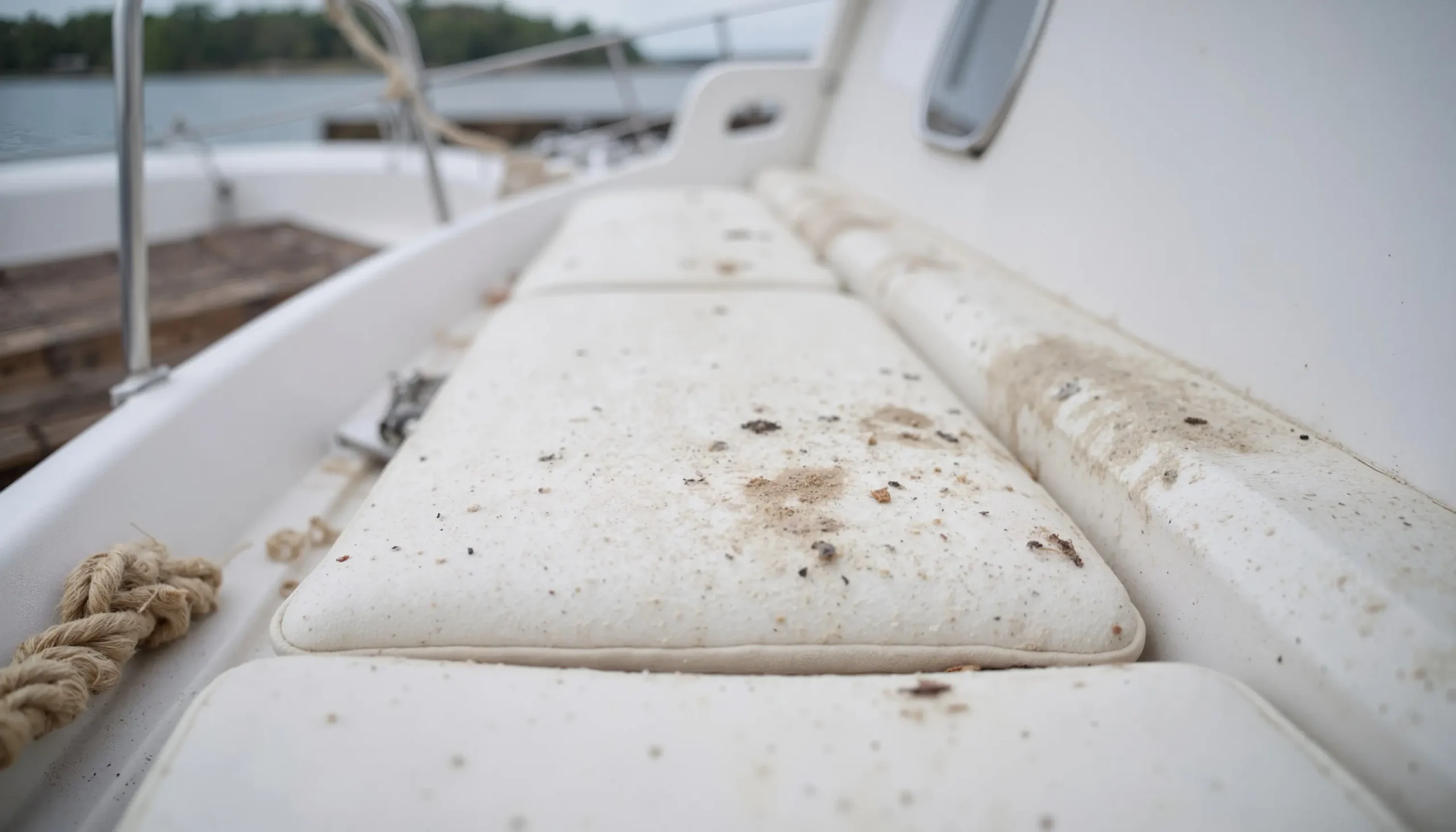
Opening your boat after months in storage only to discover musty odors, dark stains, or fuzzy growth on the seats is a frustrating, but common, experience. Mold and mildew thrive in the damp, enclosed conditions often found inside stored boats, especially when moisture gets trapped in the upholstery, carpet, cushions, or storage compartments.
Left untreated, mold and mildew can permanently damage marine fabrics and vinyl, while creating unpleasant odors and potential health concerns. Knowing how to identify the problem early, and when cleaning is no longer enough, can help you protect your boat’s interior and avoid extensive damage.
At Samson Sports, we offer professional upholstery repair and replacement services to help restore boat interiors affected by moisture, staining, and long-term mildew exposure.
What’s the Difference Between Mold and Mildew?
Although the terms are often used interchangeably, mold and mildew are slightly different types of fungal growth.
Mildew
Mildew typically appears first and is usually easier to remove. It often looks:
- White, gray, or light yellow
- Powdery or flat in texture
- Concentrated on surface materials like vinyl or fabric
Mold
Mold tends to be more invasive and can spread deeper into cushions, foam, stitching, and underlying materials. You might notice:
- Black, green, brown, or dark gray colors
- Fuzzy, slimy, or patchy areas
- Strong musty odors
Some forms of black mold can present serious health concerns, particularly for individuals with allergies, asthma, or respiratory sensitivities. Regardless of type, mold growth inside a boat should be addressed quickly before it spreads further.
Where Mold and Mildew Commonly Develop in Boats
Moisture buildup can occur almost anywhere inside a boat, but a few areas are more vulnerable.
- Upholstered Seating: Seats and cushions absorb moisture from humidity, rain exposure, wet clothing, and improper storage ventilation.
- Storage Compartments: Closed compartments trap humid air and remain damp for extended periods of time.
- Carpet and Flooring: Carpeted surfaces can retain moisture beneath the visible surface, encouraging hidden fungal growth.
- Stitching and Seams: Thread and seams frequently hold moisture longer than the surrounding vinyl surfaces.
- Cabin Interiors: Cabin boats and enclosed spaces with limited airflow are especially susceptible to mold buildup during storage.
- Covers and Canvas: Boat covers that trap moisture, rather than ventilate properly, can worsen mold and mildew issues significantly.
How to Prevent Mold and Mildew During Boat Storage
Preventative maintenance can dramatically reduce the risk of future mold problems.
- Keep the Interior Dry: Never store the boat while cushions, carpeting, or compartments are still damp.
- Increase Airflow: Ventilation is one of the most effective defenses against mold buildup.
- Use Moisture Absorbers: Dehumidifiers or moisture-control products can help manage humidity levels during storage.
- Clean Before Storage: Remove dirt, food residue, sunscreen, and moisture before covering the boat.
- Inspect Upholstery Regularly: Catching small mildew spots early can prevent larger infestations later.
DIY Methods for Removing Mold and Mildew from Your Boat
For mild surface mildew, you may be able to improve the condition of your upholstery with careful cleaning.
- Dry the Interior Thoroughly: Open all compartments, remove cushions when possible, and allow the boat to fully air out before cleaning.
- Use Marine-Safe Cleaners: Choose cleaning products specifically formulated for marine vinyl and upholstery to avoid damaging the material.
- Gently Scrub Affected Areas: Use a soft brush or cloth, rather than abrasive scrubbers that can damage protective coatings.
- Rinse and Dry Completely: Residual moisture can allow mold to return quickly, so thorough drying is particularly important.
- Improve Ventilation: Use ventilation systems, moisture absorbers, or breathable covers during storage to reduce future moisture buildup.
When Mold and Mildew Affected Interiors Can’t Be Salvaged
Unfortunately, some mold damage extends beyond what surface cleaning can fix.
Signs upholstery may need professional repair or replacement include:
- Deep staining that does not lift after cleaning
- Persistent odors trapped inside cushions or foam
- Cracked or brittle vinyl
- Mold repeatedly returning after treatment
- Soft, deteriorating seat foam
- Widespread staining across multiple interior surfaces
- Damage beneath seams or hidden under upholstery
Once mold penetrates deeply into foam and backing materials, replacement is often the safest and most effective solution.
Are Mold and Mildew Dangerous?
In addition to damaging upholstery, mold and mildew can impact the air quality inside enclosed boats, potentially causing:
- Allergic reactions
- Respiratory irritation
- Asthma flare-ups
- Strong persistent odors
- Increased material deterioration over time
Black mold is the most dangerous, but any substantial fungal growth inside a boat should be treated seriously to protect both occupants and the vessel itself.
Expert Boat Upholstery Repair and Replacement Services
When mold and mildew damage becomes too severe for cleaning alone, professional upholstery restoration can help bring your boat back to life.
Samson Sports provides professional boat upholstery repair and replacement services designed to address damaged marine seating, vinyl, foam, and interior materials. Whether your boat has isolated mildew staining or widespread moisture damage, custom restoration solutions can improve the appearance and long-term durability of your boat.
Reach out to our team today to learn more about the restoration options available to you.
Back to Boat Upholstery Repair and Replacement