
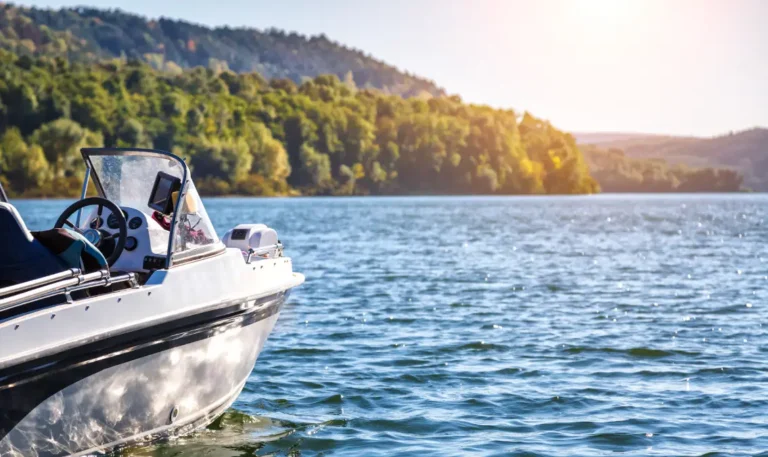
Labor Day has come and gone, so that means the wakeboarding season is officially over, right? It’s time for boats to get winterized, covers strapped down, and riders to scroll through summer trick clips until next May. Sound good? No way! Here at Samson Sports, we say that calling it quits at the first sign of fall is a gigantic missed opportunity.
Depending on where you live, there are probably still plenty of opportunities for cool weather wakeboarding. You just need to know how to plan for it properly. At Samson Sports, our crew lives for the crisp mornings, empty lakes, and butter-flat water that only autumn can deliver. Cold-weather wakeboarding isn’t just possible — for seasoned riders, it’s often the absolute best riding of the entire year. However, respect for cold water is non-negotiable. Going out unprepared when water and air temperatures drop can quickly turn a fun session into a serious safety hazard.
Here is everything you need to know about extending your season safely, choosing the right cold-weather gear, and preparing your boat for when the frost finally takes over.
Key Takeaways:
- Empty Water Beats Hot Weather: Late-season riding trades 90°F heat and boat-ramp gridlock for wide-open lakes, zero cruiser rollers, and glass from shore to shore.
- Cold Shock Strikes First, Hypothermia Second: The involuntary gasp reflex and rapid heart-rate spike hit within 90 seconds of hitting sub-60°F water—way before gradual core cooling becomes a threat.
- Use the 120°F Combined Rule: Add the air temperature to the water temperature to eliminate guesswork and dictate whether you need a standard sealed suit, a 5/4mm rig, or a drysuit.
- Riding Wet at 22 MPH Demands Serious Layers: Standard summer vests won’t cut it. Windproof smooth-skin neoprene, closed-toe bindings, and pre-warmed wetsuits are mandatory to offset aggressive evaporative cooling.
- Run Cold Sets Like an Expedition: Cap rider rotations at 10 to 12 minutes, carry USCG-approved flotation, verify battery cranking health before leaving the dock, and monitor short fall daylight windows.
- Beat the April Manufacturing Rush: Winter is prime fabrication season. Upgrading towers, racks, and hardware while the boat is winterized ensures zero downtime when the lakes thaw.
Why Wakeboarding in the Fall is Awesome: 5 Undeniable Benefits to Cooler Weather
Sure, nothing beats drying off under a blazing 90°F July sun, but if you look past the temperature drop, autumn riding offers distinct advantages over peak summer:
- Unbroken Glass from Shore to Shore: In July, you spend half your session dodging personal watercraft, cruiser rollers, and choppy boat wash. By October, public waterways empty out completely. You can run pristine, butter-flat double-ups all morning without hitting a single stray wake.
- Zero Launch Ramp Chaos: Say goodbye to 45-minute lines at the boat ramp, fighting over trailer parking, and crowded tie-up docks. In the fall, the ramp is yours. You slide in, fire up, and hit the water on your own schedule.
- Peak Marine Engine Performance: Naturally aspirated and supercharged marine engines thrive in cooler ambient temperatures. Cooler air is significantly denser and oxygen-rich, giving your motor cleaner combustion and snappier throttle response out of the hole when hauling heavy ballast.
- Spectacular Scenery & Golden Hour Lighting: Low-angle autumn sun cuts through afternoon glare and highlights golden tree lines along the shoreline. Fall sessions produce richer, contrast-heavy video and photo clips than washed-out midday summer glare ever could.
- Less Fatigue from Sun & Heat Exhaustion: Riding under blistering summer heat actively dehydrates riders and saps energy between sets. Crisp 55°F to 65°F air keeps your core temp regulated, allowing for sharper focus and more productive progression sessions.
How Cold is Too Cold? Understanding Safety Thresholds
Before loading up the crew, you need an objective way to evaluate whether conditions are safe. Never judge a cold-weather ride simply by how sunny it looks outside.
The “120°F Rule” of Cold-Water Watersports
In towed watersports and maritime safety, the standard baseline is the Combined Temperature Formula:
AirTemp(°F)+WaterTemp(°F)=SafetyScore
| Combined Score | Risk Level | Required Protocol |
| 120°F or Higher | Low Risk | Standard riding gear; a light neoprene top or spring suit is generally sufficient. |
| 100°F to 119°F | Moderate Risk | Full wetsuit (3/2mm or 4/3mm) mandatory. Initial cold-water shock risk is present upon entering the water. |
| Under 100°F | High Danger Zone | Heavy 4/3mm–5/4mm suit or a sealed drysuit mandatory. Sessions must be kept short (under 10 minutes per set), with emergency re-warming gear onboard. |
Cold Water Shock vs. Hypothermia
Many riders mistake hypothermia as the immediate danger. In reality, Cold Water Shock is what catches people off guard first.
When you fall into water under 60°F, your body’s autonomic nervous system triggers an involuntary “gasp reflex.” If your head is submerged when that gasp occurs, you can inhale water instantly. Sudden cold exposure also causes rapid peripheral vasoconstriction, spiking your heart rate and blood pressure within seconds.
Hypothermia—the gradual drop of your core body temperature below 95°F—takes 20 to 30 minutes to set in. Cold shock happens in the first 90 seconds. Dressing correctly mitigates both.
What to Wear: Wakeboard Drysuit vs. Wetsuit & Neoprene Guide
The right technical apparel forms an impenetrable barrier between you and the elements. Choosing between a wakeboard drysuit vs. wetsuit comes down to water temperature, mobility needs, and how much cold-water shock protection you require:
| Feature / Metric | Performance Wetsuit | Sealed Drysuit |
| Ideal Water Temp | 50°F to 68°F | Below 50°F (down to near-freezing) |
| How It Works | Traps and warms a micro-layer of water against skin | 100% waterproof barrier over thermal base layers |
| Mobility & Feel | Athletic compression, zero drag, maximum board feel | Looser fit; higher bulk and slight wind drag |
| Material Build | Limestone-based closed-cell foam neoprene | Waterproof nylon/laminate shell with latex/silicone gaskets |
| Best For | High-mobility trick progression, late fall cuts | Extreme late-season sets, sub-45°F air temps |
- Wetsuits: Modern performance suits utilize limestone-based closed-cell foam neoprene (such as Yamamoto formulations), which absorbs significantly less water, stretches better, and offers higher micro-bubble thermal insulation than petroleum-based alternatives. A micro-layer of water passes through the barrier, where your body heat quickly warms it against your skin. Wetsuits deliver compression, aerodynamic efficiency, and unfiltered board feel.
- Drysuits: Completely loose-fitting, waterproof nylon/laminate shells equipped with airtight latex or silicone gaskets at the neck, wrists, and ankles. Zero water enters the suit. You regulate warmth by layering moisture-wicking synthetic or merino poly-fleece undergarments underneath. While loose fabric creates slight wind resistance during high-speed cuts, drysuits are non-negotiable when water temperatures plummet below 50°F or air temperatures hover near freezing.
Wetsuit Thickness Guide: Wakeboarding by Water Temperature
Use this water temperature wakeboarding guide to dial in the exact neoprene profile and seam construction needed for your session:
| Water Temp (°F) | Recommended Suit | Seam Construction & Lining Specs | Target Conditions |
| 62°F – 68°F | 3/2mm Fullsuit | Flatlock or GBS (Glued & Blind-Stitched) | Early autumn glass; high air temps |
| 54°F – 61°F | 4/3mm Sealed Fullsuit | Fully taped GBS seams + interior poly-fleece lining | Standard fall workhorse; brisk winds |
| 48°F – 53°F | 5/4mm Hooded Fullsuit | Fluid-welded liquid seams + fully taped interior | Late-season die-hard sessions |
| Below 48°F | Sealed Drysuit | Taped waterproof laminate shell + thermal fleece mid-layers | Winter riding; sub-freezing ambient air |
- Seam Construction Matters: Avoid standard flatlock stitching on cold sessions, as it punches thousands of needle holes straight through the neoprene. Insist on Glued and Blind-Stitched (GBS) construction, where neoprene panels are glued edge-to-edge before a curved needle penetrates only halfway through the material. For sub-60°F sessions, look for fully taped seams (an elastic tape heat-welded along every internal seam) rather than basic “critical taping” (which only reinforces stress junctions like the crotch and underarms).
- Thermal Poly-Fleece Linings: High-performance cold-water suits feature fast-drying thermal poly-fleece linings on the chest, back, and upper thighs. These high-pile microfibers trap warm air pockets against your core, shed water instantly between sets, and eliminate the shock of pulling on a damp suit for a second rotation.
- The Wakeboarding Windchill Factor: Surfers sit stationary in the water; wakeboarders cut behind the boat at 20 to 23 mph while soaking wet, inducing severe evaporative and convective cooling. Look for suits with smooth-skin (single-lined) neoprene chest and back panels. Smooth-skin sheds water immediately, preventing icy wind from cutting through wet outer jersey fabric straight into your core.
Essential Cold-Weather Gear & On-Boat Warmth Hacks
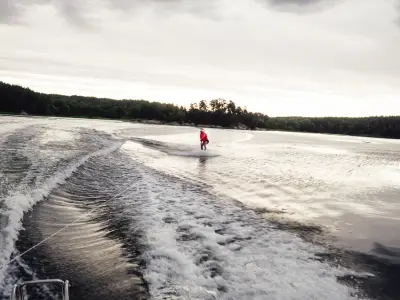
Staying warm on a cold session requires proper setup inside the boat as much as out on the line.
Rider Accessories
- Closed-Toe Bindings: Open-toe boots let freezing lake water constantly circulate over your toes. Closed-toe bindings trap foot heat and keep your extremities functional.
- 1.5mm to 2mm Neoprene Gloves: Cold water stiffens finger tendons fast, leading to early grip fatigue on the handle. Thin neoprene gloves preserve tactile bar grip while blocking windchill.
- Neoprene Beanie: You lose significant core body heat through your head. A thin 1.5mm neoprene beanie keeps your ears and scalp insulated without adding bulk.
On-Boat Comfort Hacks
- The Thermos Primer Trick: Keep a large insulated thermos filled with hot (not scalding) tap water onboard. Right before stepping onto the swim deck, pour warm water down the collar of your wetsuit. This pre-warms the neoprene interior, eliminating the initial shock the moment you slide into the lake.
- Fleece-Lined Windproof Parkas: The coldest part of the set is the boat ride back after dropping the rope. Have a heavy, fleece-lined boat parka or oversized changing poncho waiting on the swim platform.
- Engine Heater Pull-Outs & Warm Showers: If your inboard is equipped with heater vents or a hot-water washdown hose, route it under a blanket or directly into your poncho between rider rotations.
Critical Precautions: Planning Like an Expedition
Going out in cold conditions carries inherent risks. Most backcountry emergencies don’t happen because people set out in terrible weather; they happen because people set out during a “window” of decent weather, experienced an unexpected delay, and were caught unprepared when conditions turned.
If you plan to ride during late autumn, treat every trip with the same mindset:
- Check the Full-Day Forecast: Never bank on an isolated 2-hour window. Watch for incoming cold fronts, sudden barometric drops, and gusting afternoon winds that kick up dangerous whitecaps. Remember that fall sunsets arrive fast—don’t get caught out after dark.
- Ditch the “Comp Vest” for a USCG-Approved or Harmonized Level 70 Life Jacket: Thin competition impact jackets look sleek, but cold water rapidly degrades swim stamina and muscle coordination. Non-approved comp vests (often rated only to ISO 12402-5 for impact) provide virtually zero upright flotation when your motor control fails. Upgrade to a life jacket carrying genuine USCG Type III approval or the newer USCG/Transport Canada harmonized Level 70 buoyancy standard. A certified Level 70 jacket guarantees at least 15.7 pounds of inherent closed-cell foam flotation—enough buoyancy to keep your airway clear and your head above water automatically if you take a violent, disorienting edge catch.
- Assign a Spotter for Swim Platform Re-Entry: Cold water saps manual dexterity and grip strength within minutes as blood shunts to your core. Even strong riders can struggle to haul their dead weight up a slick swim ladder or haul over a wet platform with numb hands. Always designate an alert crew member to physically assist the rider out of the water the second the handle is dropped.
- Keep Sessions to About 10 Minutes or Less: Cold muscles react slower, leading to awkward edge catches and harder impacts. Rotate riders on strict 10-minute sets to keep everyone energized and warm.
- Check Your Marine Battery & Float Plan: Cold mornings significantly reduce battery cranking amperage. Verify your batteries are holding a full charge before heading down the ramp, and always let someone onshore know your exact launch site, lake route, and expected return time.
- Watch for Submerged Debris: Fall winds and rain runoff wash dead logs, floating branches, and dense weed mats into main lake channels. Keep a sharp eye from the helm to protect your running gear.
After the Last Ride – Winterization, Storage & Off-Season Upgrades
Eventually, temperatures drop below freezing, ice rings the launch ramp, and it’s time to put the boat away for the winter. What you do during the off-season determines how smoothly your next spring starts.
1. Proper Winterization
Freezing water expands roughly 9% by volume—enough force to split cast-iron engine blocks and burst cooling lines overnight:
- Engine & Heat Exchangers: Fully drain the engine block, exhaust manifolds, transmission coolers, and raw-water strainers. Flush with non-toxic marine antifreeze.
- Empty Ballast Lines & Pumps: Hard tanks, flexible ballast bags, impellers, and reversible pumps trap standing water in their lowest fittings. Blow out your lines completely to avoid split fittings come spring.
- Fuel & Electrical: Add marine fuel stabilizer to prevent ethanol separation, top off the tank to minimize internal condensation, and pull your marine batteries to store on a smart trickle charger indoors.
2. Moisture Control in Storage
Clean the interior thoroughly before storing. Any damp towels, trapped life jackets, or carpet moisture will breed mold and mildew under a winter tarp. Place high-capacity moisture-absorbing buckets in the open cockpit and under the bow cover.
3. The Off-Season Upgrade Window: Planning Ahead with Samson Sports
Winter might be the off-season for riding, but it is prime time for boat fabrication.
Most boaters wait until the first 70°F weekend in April to realize they need upgrades—creating massive 8- to 12-week backorders across the marine manufacturing industry. Taking advantage of the fall and winter months ensures your boat is completely dialed, outfitted, and ready the exact day spring opens up.
Why Upgrade with Samson Sports?
You don’t need to spend six figures on a brand-new towboat to get elite wakeboarding performance. Since 1999, Samson Sports has custom-built wakeboard towers, top-quality board racks, bimini tops, and precision hardware right out of our shop in Southwest Washington.
We do not build one-size-fits-all hardware. Every Samson tower is CNC-machined and hand-welded from aircraft-grade aluminum to match the exact deck profile and curvature of your boat’s specific make, year, and model. If your boat needs a factory-level tow height, rock-solid stability, or a custom-integrated sun top, the offseason is the perfect opportunity to make it happen.
FAQs About Wakeboarding in Cool Weather Conditions
The crisper pop riders experience in autumn is real, but it’s driven by a combination of surface conditions, engine efficiency, and gear behavior. While dock talk often credits “thick, cold water” for massive kick, freshwater density only increases by roughly 0.3% between 75°F and 40°F — nowhere near enough to physically alter hull displacement or jack up a wake on its own.
Without summer boat traffic, you ride on glass; smooth, unbroken water allows the hull to produce clean, laminar flow off the running surface, leaving a firm, defined lip rather than a washed-out, aerated roller. At the same time, cool ambient air delivers denser oxygen to the engine, improving throttle response and holding boat speed rock-steady up the transition.
What feels like a “harder” wake or stiffer landing underfoot usually comes down to equipment: cold water stiffens board resin, binding chassis, and thick neoprene, reducing compliance and transmitting impact force more abruptly straight into your knees and ankles.
You don’t need to dump 15% of your ballast to compensate for water density, but you should adjust for how crisp the wake stands up in glassy water. Because undisturbed autumn water produces a steeper, more defined transition without crumbling, some riders find the lip kicks them straight up rather than out; dropping your speed by 0.5 mph can help mellow out the peak.
If the pocket feels narrower or the wake feels too close, lengthen your line by 2.5 to 5 feet to hit the sweet spot of the transition. As for ballast, the cleaner water and cooler engine intake mean your boat won’t struggle to plane or hold speed, allowing you to run your preferred summer weight without the engine bogging down under the load.
Avoid static stretching on a cold dock, which can strain cold muscle fibers. Instead, perform 5 to 7 minutes of dynamic activation inside the boat or onshore: leg swings, walking lunges, torso twists, arm circles, and bodyweight squats to drive blood flow to your extremities. Use resistance bands for shoulder rotations to prep your rotator cuffs for handle tension, and never take your first cut out into the flats until you have ridden down-the-line for a minute or two to let your joints adapt.
Regional weather apps report data from airport weather stations miles inland and surface water readings from deep-water buoys, which rarely reflect the microclimate of a protected cove. For accurate on-site readings, use a handheld infrared digital thermometer or an analog floating pool thermometer dropped 12 to 18 inches below the surface off the swim platform. To gauge ambient air, mount an inexpensive digital marine thermometer shielded from direct sunlight and engine heat wash.
Cold exposure triggers non-shivering thermogenesis, burning glycogen rapidly just to keep your core stable. Pack a thermos with hot herbal tea, bone broth, or warm electrolyte drinks; hot fluids immediately raise internal core temperature while preventing cold-induced dehydration. For snacks, lean on complex carbohydrates and healthy fats like nut butter packets, trail mix, whole-grain energy bars, and dark chocolate to deliver sustained, slow-burning fuel rather than quick-crash sugary snacks.
Stay Warm and Keep the Lines Tight!
Don’t let the calendar dictate when your season ends. With the proper neoprene, a smart safety plan, and an eye on the thermometer, fall can easily become your favorite time to ride.
Bundle up, respect the water, and enjoy the glassy autumn mornings. And when you’re ready to get your boat outfitted for next season, reach out to our team at Samson Sports for a custom estimate—we’ll make sure your rig is built to perform for years to come.
